
City Airplane Flight Games 3D
Gaming MobRole Playing
3.82.00 Reviews
- Version
- 0.2
- Installs
- 500.00K
- Age Rating
- Everyone
Screenshots
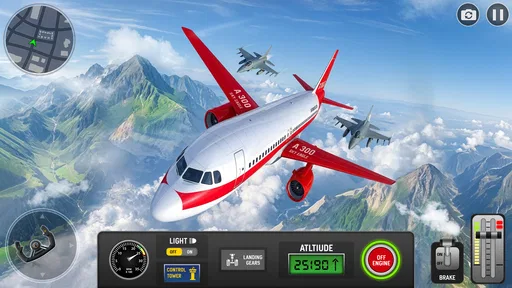
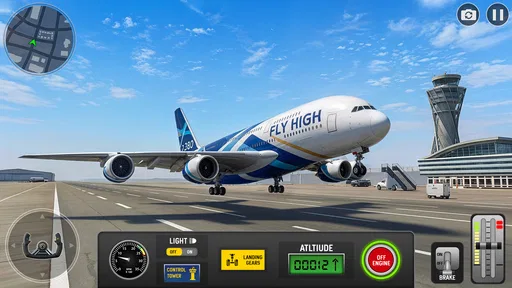
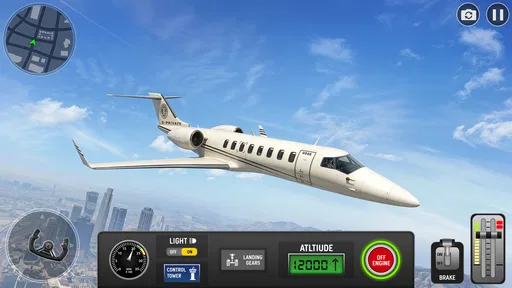
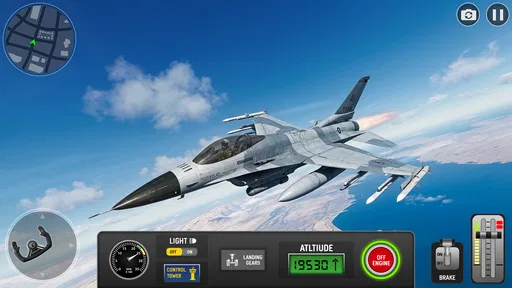
Our Review of City Airplane Flight Games 3D
 Analysis by Appyee
I spent time with City Airplane Flight Games 3D as a lightweight role-playing flight game, and my first impression was that it aims for a very approachable kind of airplane play. The central appeal is simple: take control of a plane, practise flying, and work toward cleaner landings in a city setting. It is free to try, rated for Everyone, and published by Gaming Mob, so it is easy to understand why it may attract casual players looking for something less demanding than a full aviation simulator.
What makes it interesting in a shared household is not a complicated progression system or a deep account structure. It is the fact that someone can pick it up for a short session and immediately understand the basic fantasy: fly above a city and attempt to bring the aircraft down safely. I found that simplicity useful when handing the device to another person, especially someone who does not regularly play role-playing games or simulation titles. At the same time, that simplicity means experienced flight fans should keep their expectations measured.
How the game fits into a shared household
A realistic everyday use case is a family tablet or a phone that several people use during spare moments. One person may want a quick flight before dinner, while another may be curious about landing an aircraft without committing to a long campaign. This game suits that kind of informal handoff better than a title that requires a lengthy tutorial, a dedicated profile, or a large amount of preparation before the first meaningful action.
I would describe the experience as a casual introduction to airplane flying games rather than a serious cockpit course. The city backdrop gives the activity a clear visual goal, while the emphasis on landing provides a natural challenge. Even if a player is not interested in aviation terminology, the basic question remains understandable: can I control the plane well enough to finish the flight safely?
That makes it suitable for short shared sessions, but I would not treat it as a genuine multiplayer game or assume that different household members can coordinate inside one session. The appeal is more about taking turns with the same device than playing together. If your household wants live cooperation, competitive races, or a shared aviation career, a more specialised game would be a better match.
On a practical level, the title has a modest entry barrier. It runs on Android from version 7.1 onward, which covers a broad range of devices, and its current version is 0.2. That version number is worth keeping in mind: I approached it as an early, relatively simple experience rather than a mature simulator with years of refinement. The game has passed half a million installs, so it is not an unknown experiment, but its scale still feels more appropriate for casual use than for a dedicated flight enthusiast.
What the first session feels like
The first thing I look for in a flight game is whether the controls communicate what the aircraft is doing. Here, the useful mindset is to make small corrections rather than constantly fighting the plane. New players often overreact when they see the aircraft drift, then create a second problem while trying to correct the first. I had better results by treating each movement as a gentle adjustment and leaving enough time to observe the result.
That is also the first non-obvious tip I would give a new player: do not wait until the final approach to start thinking about the landing. Begin lining up early, keep the aircraft stable, and use the last part of the flight for fine corrections. This turns the landing from a frantic reaction into a sequence of manageable decisions. It is a small change, but it makes the game feel more controlled.
The city environment helps with orientation because it gives the flight a visible sense of place. It also creates a trade-off. A recognisable urban scene can make the game more inviting, yet visual surroundings may draw attention away from the aircraft’s position and approach. When I played, I found it better to glance at the environment for orientation but focus primarily on the plane’s alignment and descent. Players who spend too much time admiring the scenery can lose the setup needed for a clean landing.
Boundaries matter more than complicated setup
Because this is a free game with an Everyone content rating, it can look like an obvious choice for a shared family device. I would still establish a simple household boundary before letting younger players use it: decide whose turn it is, how long a session should last, and whether the device is being used for play or for another task. Those are ordinary rules, but they matter more here because the game is easy to start and easy to pass from one person to another.
I would also avoid presenting it to children as an educational aviation tool. It can help someone think about steering, timing, and landing, but that is different from teaching real-world piloting. The game offers an entertainment interpretation of flight, not a substitute for instruction. That distinction is especially important when a child becomes fascinated by aircraft and begins asking practical questions about real planes.
For a shared phone, I recommend agreeing on the device’s existing boundaries rather than assuming the game creates them. The title should be judged as a game that happens to be accessible to a wide age range, not as a family-management application. If your household needs separate child profiles, play-time scheduling, purchase restrictions, or detailed activity reporting, those needs belong to the device or operating system rather than to this particular flight experience.
Another useful boundary concerns expectations. A younger player may enjoy simply moving the aircraft around the city, while an older player may focus on landing accuracy. Neither approach is wrong, but they are different goals. I found that sessions became more enjoyable when everyone agreed whether the aim was exploration, practice, or completing a flight successfully. Without that agreement, a child may see a failed landing as part of the fun while an adult sees it as a mistake that should be corrected.
Taking turns without turning play into an argument
The game works well for informal coordination because a flight naturally creates a beginning, middle, and end. One player can take the controls, another can watch the approach, and then the device can be passed over after the landing attempt. I would use that structure instead of interrupting someone halfway through a difficult manoeuvre. Even a short turn feels more satisfying when the player gets to complete the immediate task.
A good household routine is to let the player choose one clear objective before starting. For example, the goal might be to keep the plane steady, practise an approach, or complete a landing without rushing. This is more helpful than giving vague advice such as “fly better.” It also makes the game easier to share with someone who has never played a flight title before.
One of the stronger practical insights is that spectators can help without taking over. A second person can watch the plane’s direction and remind the player to make a small correction, but grabbing the device or issuing several instructions at once usually creates confusion. I found that calm, single-step guidance worked best: first line up, then stabilise, then focus on the landing. This approach is useful when an adult is helping a child, but it also works when two inexperienced players are learning together.
The game is less suitable for a household that expects persistent shared progress. I would not assume that one person’s results automatically create a meaningful record for someone else, or that a family can maintain separate in-game identities. If individual achievement tracking is central to your decision, check the current in-game experience on the device before making it the household’s main shared game. For casual turn-taking, that limitation is manageable; for a structured family competition, it may become frustrating.
Age, trust, and the role of the adult
The Everyone rating makes the game feel broadly approachable, and I can see why it would appeal to children, teenagers, and adults who want a simple aviation-themed activity. Still, an age label does not tell you whether every child will enjoy the controls or understand the difference between game physics and real flying. Younger players may need help with the basic idea that a plane does not respond instantly to every movement.
I would introduce it by explaining that the goal is not to make dramatic movements but to guide the aircraft patiently. That framing reduces frustration and gives the child something concrete to practise. It also creates a useful opportunity to talk about attention and timing without pretending the game is a formal lesson.
Trust is relevant in another way: shared devices often contain personal accounts, photos, and other applications. The game itself should not be treated as a replacement for household account boundaries. Before passing a phone or tablet to someone else, I would make sure the device is already set up for safe sharing, with the owner’s normal privacy habits in place. That is not a special feature of this title; it is simply sensible practice for any game used on a personal device.
Adults should also decide whether the game’s simplicity is a benefit or a drawback for the child in question. A beginner who wants an immediate activity may enjoy it, while a child who needs a strong sense of progression may lose interest quickly. Likewise, someone who is sensitive to repeated failed landings may need encouragement to treat each attempt as practice rather than as a judgement of skill.
Where it stands beside other flight and role-playing games
Compared with a full flight simulator, this is much easier to approach. A serious simulator usually asks the player to learn more systems, understand more controls, and spend longer preparing for each flight. That depth can be rewarding, but it is not always suitable for a shared household or a five-minute break. This game’s advantage is that it focuses attention on the immediate experience of flying and landing rather than overwhelming a beginner with aviation detail.
Compared with arcade flying games, its landing focus gives the session a clearer sense of purpose. Arcade titles often reward speed, stunts, combat, or spectacle. Here, the satisfaction comes from control and completion. Players who want explosions, elaborate missions, or competitive action may find the experience too restrained, while people who enjoy the small challenge of bringing a plane down neatly may appreciate the narrower focus.
It also differs from story-heavy role-playing games. The role-playing label places it in a broad category, but I would not choose it for character development, dialogue, equipment management, or a long narrative journey. Its role-playing appeal is closer to stepping into the part of a pilot and improving through repeated attempts. That can be enough for a casual player, but it should not be confused with a conventional adventure RPG.
The main trade-off is therefore clear: accessibility over depth. I think that is the right choice for a free game aimed at quick sessions, but it limits replay value for players who want a detailed simulation model. If you already know that you enjoy realistic cockpit procedures, a dedicated simulator will probably offer more lasting value. If you simply want to practise basic flight control in a city environment, the lighter design is more welcoming.
Small techniques that make the game easier to enjoy
My first technique is to separate steering from landing in your mind. During the earlier part of a flight, concentrate on keeping the aircraft pointed where you want it to go. As the landing area becomes the priority, reduce unnecessary movement and focus on alignment. Trying to solve direction, height, and speed all at once makes the final approach feel harder than it needs to be.
My second technique is to use failed attempts as information. If the plane reaches the landing area misaligned, ask what happened before the final approach. The problem may have started earlier, when the aircraft drifted and the correction was delayed. This turns the game into a simple feedback loop: observe the result, identify the earliest mistake, and adjust sooner next time.
My third tip is especially useful on a shared device: let each player keep a personal challenge rather than comparing only successful landings. One person may be working on smoother steering, while another is trying to stay calm near the ground. This avoids making the household session feel like a contest that only rewards the most experienced player.
I would also play in a quiet enough setting to see and understand the aircraft’s movement. The game is not ideal when the player is constantly interrupted, because small corrections require attention. A short, focused session can be more satisfying than a longer session in which several people are talking over the player or asking for the device.
Performance expectations and the early version question
The current version is 0.2, which changes how I judge the product. I am more forgiving of a compact feature set in an early release, but I also recommend approaching it with realistic expectations about polish and long-term depth. The game can be worthwhile as a straightforward flight activity without needing to compete with large, established simulators.
The broad Android compatibility is helpful for households that do not all use the newest phone. Even so, the experience of a 3D game can vary between devices, particularly when several applications are open or the hardware is older. I would close unnecessary apps before handing the device to a child or another player, not because this title demands specialist preparation, but because a smoother session makes steering easier to understand.
The free price lowers the risk of trying it. That matters when you are choosing something for a shared device and do not yet know whether everyone will enjoy the subject. I would still make the decision based on the actual play style rather than the absence of a price: free does not automatically mean deep, polished, or suitable for every household.
The game’s average rating is 3.8 from around 160 ratings, which suggests a mixed but reasonably positive reception rather than universal enthusiasm. I read that as consistent with my experience: the central idea is easy to understand and potentially enjoyable, but players looking for a more complete aviation package may want more complexity. The title has also reached over 500 thousand installs, giving it a meaningful casual audience without making it a guaranteed fit for serious simulation fans.
Who should install it, and who should skip it
I would recommend it to someone who wants a free city flight game for short sessions, especially if the player enjoys learning through repetition. It is a sensible choice for a household that wants an easy game to pass around, provided everyone understands that the sharing is turn-based rather than a built-in cooperative experience.
It is also a good starting point for a child or adult who is curious about airplane games but does not want to learn an intimidating control panel. The landing objective gives the player a concrete target, and the city setting keeps the experience more inviting than a purely technical presentation.
I would skip it if your priority is realistic aviation procedure, detailed aircraft systems, persistent profiles, or a substantial story. I would also look elsewhere if your household needs clearly separated accounts or structured multiplayer coordination. Those are not minor preferences; they change the kind of product you need.
For a serious flight fan, the best use may be as a quick contrast to a more demanding simulator. Its lighter approach can be refreshing when you do not want to configure a long flight, but it is unlikely to replace a deeper title. For a casual player, that same limitation is the reason it remains approachable.
My household verdict
After using it as both a solo game and a possible shared-device activity, I see City Airplane Flight Games 3D as a simple, accessible way to spend a few minutes practising virtual flight and landing. Its strongest quality is the clear focus: you are not asked to understand an entire aviation career before enjoying the basic act of guiding a plane through a city.
I like it most when the session has a modest goal and a relaxed atmosphere. Let one person fly, let them finish the attempt, and use calm observations rather than constant instructions. That approach brings out the game’s value and prevents its limited depth from becoming the centre of attention.
My recommendation is positive but specific. Choose it for approachable, turn-based household play and uncomplicated landing practice, not for a complete simulator or a shared online aviation experience. Gaming Mob has created something easy to try, and the free entry point makes that simplicity reasonable. Just keep the age rating, account boundaries, and early version in perspective, and it can be a pleasant small game for the right player.
Verdict
Strengths of City Airplane Flight Games 3D
- Easy controls make flying accessible for casual players.,3D city environments provide a fun sense of exploration.
- Short missions are suitable for quick gaming sessions.
- Multiple aircraft add variety to the gameplay.
- Offline play is useful when you do not have internet access.
Limitations of City Airplane Flight Games 3D
- Missions can become repetitive after extended play.
- Graphics may look dated on newer phones and tablets.
- Some aircraft or levels may require in-app purchases.
- Frequent ads can interrupt gameplay between missions.
- Flight physics feel more arcade-like than realistic.
Similar Picks in This Category
View All
Hair Dye
CrazyLabs LTD4.4

Monster High™ Beauty Salon
CrazyLabs LTD4.5

Bus Simulator - Bus Games 3D
Jima Apps4.4

Flight Pilot: 3D Simulator
Wildlife Studios4.1


Super Stylist Fashion Makeover
CrazyLabs LTD4.4
Frequently Asked Questions
What is City Airplane Flight Games 3D?
City Airplane Flight Games 3D is a mobile flight simulation game focused on flying aircraft through a detailed urban environment. Players can take off, navigate around city buildings, complete missions, and land safely at designated locations. It combines simple arcade-style controls with 3D visuals, making it more accessible than a highly technical aviation simulator while still offering challenges for new pilots.
How do you control the airplane in City Airplane Flight Games 3D?
The game generally uses touchscreen controls designed for mobile devices, with options for steering, adjusting altitude, managing speed, and controlling the aircraft during takeoff and landing. New players may need a few attempts to become comfortable with the sensitivity. Flying too quickly near buildings or making sharp turns can easily lead to crashes, so gradual movements and careful attention to the environment are important.
What can you do in City Airplane Flight Games 3D?
Gameplay usually revolves around completing different flying objectives in a city setting. Depending on the mission, you may need to take off from an airport, follow checkpoints, fly through marked areas, avoid obstacles, transport passengers or cargo, and land at a target destination. The missions provide variety, although the overall experience remains centered on short flight challenges rather than a full professional aviation career mode.
Is City Airplane Flight Games 3D suitable for beginners?
Yes, the game is generally suitable for beginners who enjoy casual airplane and driving-style simulation games. Its controls are easier to understand than those found in advanced flight simulators, and early missions help players learn basic movement and navigation. However, landing can still be difficult at first, especially when speed and altitude are not managed properly. Practice is useful before attempting more demanding challenges.
Does City Airplane Flight Games 3D require an internet connection or contain advertisements?
Requirements can vary depending on the version and platform, so it is worth checking the app store listing before downloading. Many games in this category support at least some offline play but may display advertisements between missions or offer optional purchases. If you want uninterrupted gameplay, review the permissions, in-app purchase information, and recent user comments to understand how advertising and connectivity are handled on your device.
Play our best games!


